Going blonde with hair extensions is one of the most exciting transformations you can make — but it’s also one of the trickiest. With dozens of blonde shades available, from icy platinum to warm honey, choosing the wrong tone can leave your extensions looking mismatched, artificial, or simply “off.” The good news is that finding your perfect blonde is entirely achievable once you understand a few key principles.
Start With Your Skin Undertone
The single most important factor in choosing a blonde shade is your skin’s undertone — the subtle hue beneath the surface of your complexion. Undertones generally fall into three categories: warm, cool, and neutral.
Warm undertones (golden, peachy, or yellow hues) suit buttery blondes, honey blondes, caramel, and golden shades beautifully. If your veins appear greenish and gold jewelry flatters you more than silver, you likely have warm undertones.
Cool undertones (pink, red, or bluish hues) pair best with ash blonde, platinum, beige blonde, and pearl tones. If your veins look bluish-purple and silver jewelry complements your complexion, cool shades are your friend.
Neutral undertones are the lucky middle ground — almost any blonde works, though champagne and natural blonde shades tend to be particularly flattering.
Never skip this step. Even the most beautifully applied extensions will look wrong if the blonde shade fights your natural coloring.
Match Your Natural Hair Color First
Extensions should blend seamlessly with your own hair, which means the shade needs to complement not just your skin but your existing hair color. If your natural hair is a dark brown, jumping straight to platinum blonde extensions will create a jarring contrast at the roots — no matter how skillfully they’re applied.
If you’re not planning to color your natural hair, choose extensions in shades closest to your own hair color, perhaps going two or three shades lighter for a sun-kissed, highlighted effect. Balayage or ombre extensions are an excellent option in this case, as they transition from a darker root to a lighter tip, naturally mimicking how hair lightens in sunlight.
If you do plan to color your hair to match, always consult a professional colorist. Trying to DIY-match your hair to extensions often results in frustrating mismatches.
Understand the Blonde Spectrum
Blonde is not a single color — it’s a vast spectrum, and knowing the major families helps you narrow your search significantly.
Platinum and Icy Blonde — The coolest, lightest end of the spectrum. Striking and high-fashion, but requires very fair or cool-toned skin to avoid looking washed out.
Ash Blonde — A muted, cool-toned blonde with grey or smoky undertones. Sophisticated and modern, ideal for cool or neutral skin tones.
Champagne Blonde — A soft, neutral shade sitting between warm and cool. Universally flattering and one of the most natural-looking options.
Golden and Honey Blonde — Rich, warm shades that radiate warmth and vitality. Perfect for warm skin tones and those who want a sun-drenched, natural glow.
Strawberry Blonde — A blend of blonde and red tones. Works beautifully on warm complexions, especially those with natural reddish or peachy undertones.
Dirty Blonde — A medium blonde with subtle brown undertones. One of the most versatile and natural-looking shades, flattering on nearly every skin tone.
Consider Your Lifestyle and Maintenance Commitment
Some blonde shades demand significantly more upkeep than others. Platinum, for example, requires regular toning to prevent brassiness and consistent care to keep extensions looking healthy and luminous. Honey or dirty blonde shades, on the other hand, are far more forgiving and grow out gracefully.
If you have a busy lifestyle or prefer a low-maintenance routine, opt for shades closer to your natural color or choose multidimensional blends with highlights and lowlights — these disguise root growth and color shifts far more effectively than a single flat tone.
Test Before You Commit
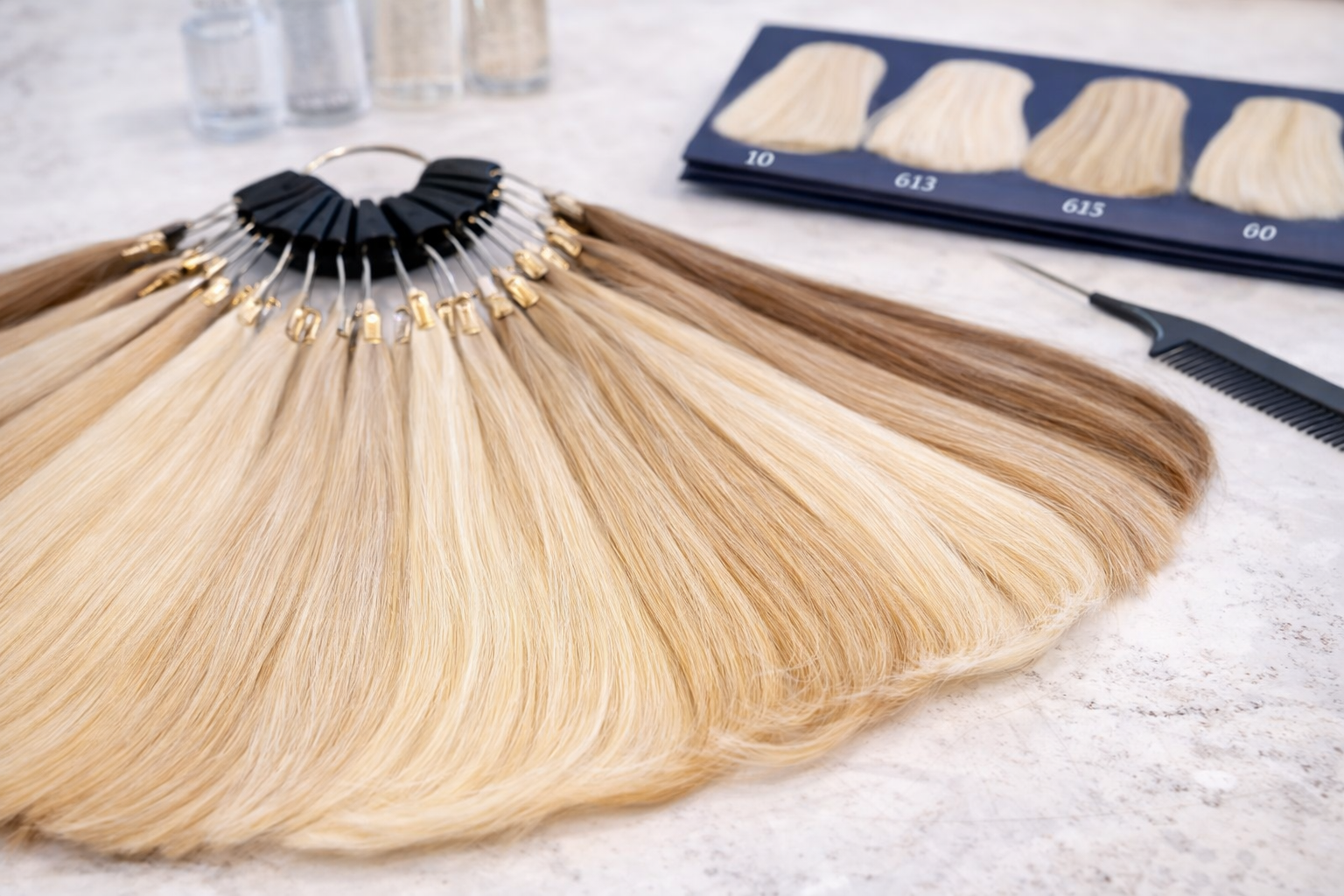
Most reputable extension brands and salons offer color swatches or sample wefts. Always request these before purchasing. Hold the swatch against your hair in natural daylight — not artificial indoor lighting, which can distort color significantly. If possible, place the swatch against your face to assess how the shade interacts with your complexion.
If you’re ordering online, read reviews carefully, look for photos from customers with similar coloring, and choose brands with flexible return or exchange policies.
Final Thoughts
Choosing the perfect blonde shade for hair extensions is equal parts science and art. By understanding your undertones, working with your natural hair color, learning the blonde spectrum, and honestly assessing your maintenance willingness, you’ll be equipped to make a confident, beautiful choice. The right blonde doesn’t just match your hair — it enhances your entire appearance and makes you feel effortlessly radiant.
