Hair extensions are one of the most popular beauty services for adding length, volume, and versatility to your hairstyle. However, choosing the right method can be confusing, especially with so many options available. Each type of hair extension has its own advantages and drawbacks, depending on your hair type, lifestyle, and desired result. Below is a clear overview of the most common methods, along with their pros and cons.
1. Tape-In Extensions
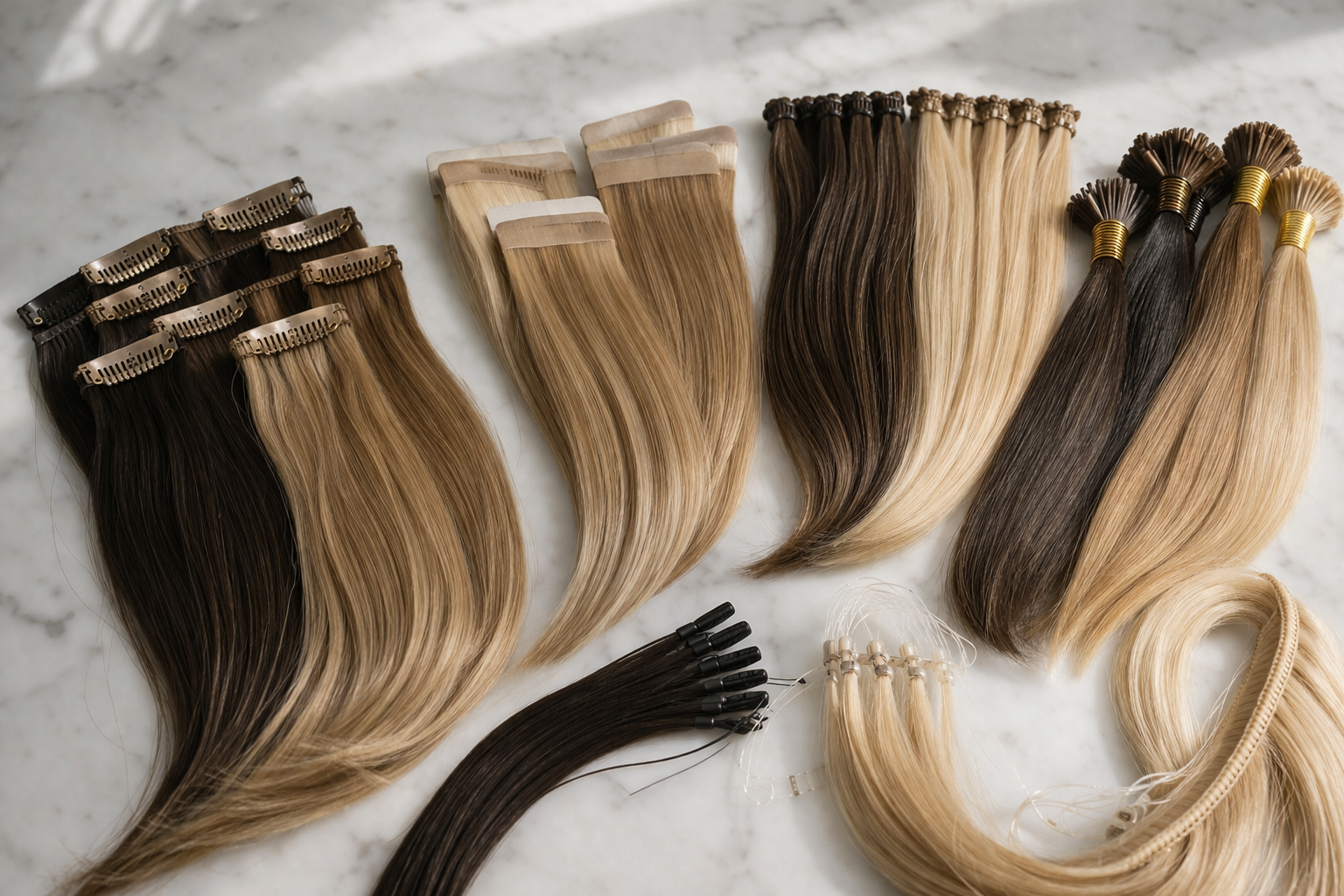
Tape-in extensions are applied using adhesive strips that attach to natural hair in “sandwich” sections. This method is known for its speed and simplicity.
Pros:
- Quick application (usually 1–2 hours)
- Lightweight and comfortable
- Reusable with proper maintenance
- Ideal for fine and thin hair
Cons:
- Requires regular maintenance (every 6–8 weeks)
- Adhesive can weaken with oils or неправильным уходом
- Not suitable for very oily scalps
2. Keratin (Fusion or K-Tip) Extensions
Keratin extensions are bonded to natural hair using heat and keratin-based glue. This method provides a very natural and long-lasting result.
Pros:
- Long-lasting (up to 3–4 months)
- Strong and secure attachment
- Natural look and movement
- Suitable for most hair types
Cons:
- Longer application time (up to 4–6 hours)
- More expensive than other methods
- Removal requires professional assistance
- Heat application may slightly damage hair if done incorrectly
3. Sew-In (Weave) Extensions
Sew-in extensions involve braiding the natural hair into cornrows and sewing wefts into the braids. This method is often used for thicker hair types.
Pros:
- Very secure and durable
- No heat or glue involved
- Ideal for thick or coarse hair
- Can last several weeks
Cons:
- Can feel tight or uncomfortable initially
- Not suitable for thin or слабые волосы
- Requires proper scalp care
- May cause tension on natural hair
4. Clip-In Extensions
Clip-in extensions are temporary pieces that can be attached and removed at home using small clips.
Pros:
- Easy to apply and remove
- No professional help required
- No damage to natural hair
- Perfect for occasional use
Cons:
- Not suitable for long-term wear
- Can feel bulky if not placed correctly
- May be visible if hair is very thin
- Needs to be removed daily
5. Micro Ring (I-Tip) Extensions
Micro ring extensions are attached using small metal rings without heat or glue. The natural hair is threaded through the ring and secured with pliers.
Pros:
- No heat or adhesives
- Reusable hair
- Long-lasting with maintenance
- Flexible styling options
Cons:
- Can slip if not installed properly
- Rings may feel noticeable
- Requires регулярную коррекцию
- Not ideal for very fine hair
Conclusion
There is no one-size-fits-all solution when it comes to hair extensions. The best method depends on your hair type, lifestyle, budget, and desired look. Tape-ins are great for a quick and natural result, keratin extensions offer long-term wear, sew-ins work best for thick hair, clip-ins are perfect for temporary changes, and micro rings provide a heat-free alternative.
Consulting with a professional stylist is the best way to determine which method will suit you best. With the right choice and proper care, hair extensions can transform your look while keeping your natural hair healthy and strong.
